Waypoint
A debt-payoff and multi-currency cashflow planner that walks every account forward day by day, with an MCP server so an assistant can record money through the same checks as the app.
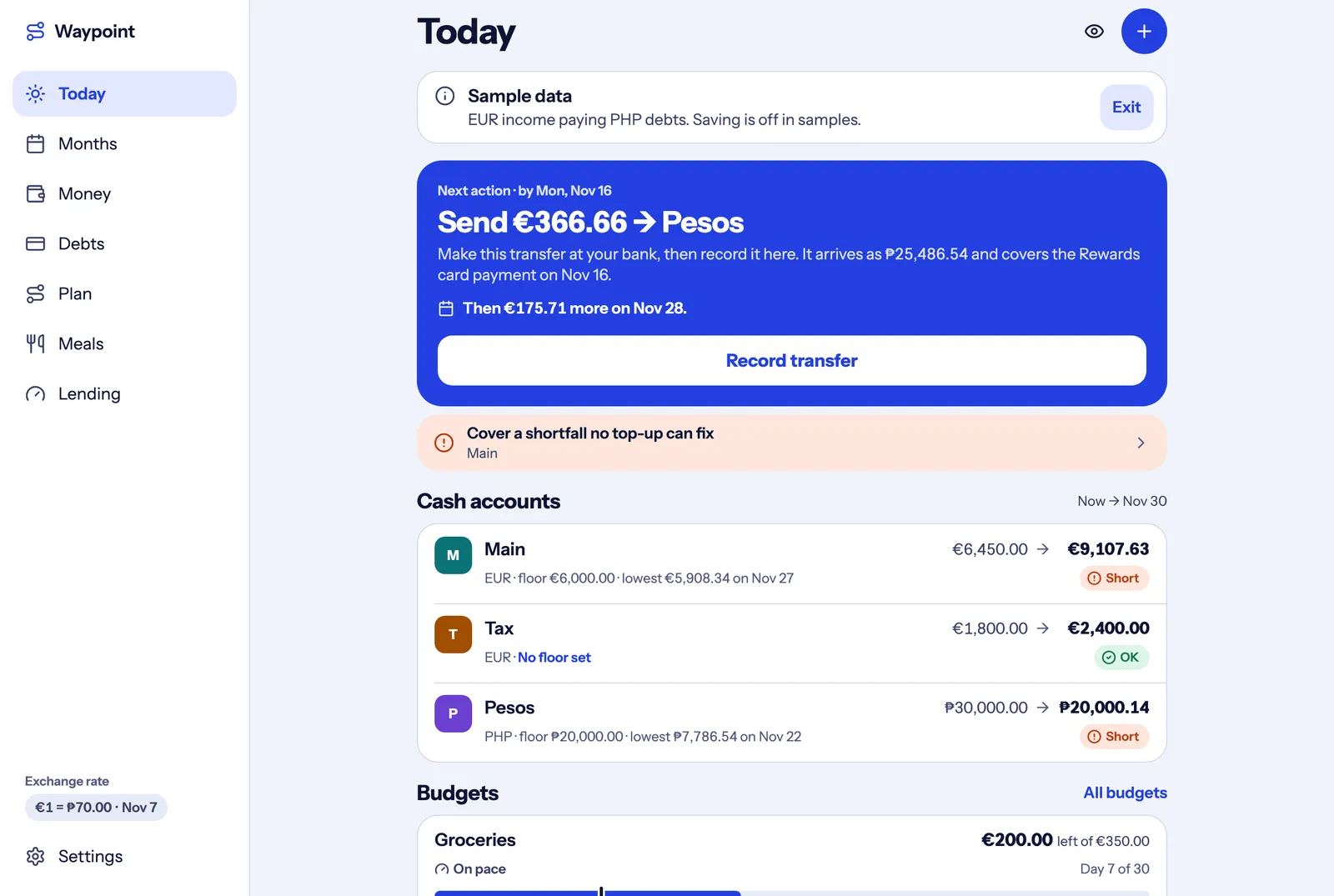
Every screen here is Waypoint’s built-in sample household, abroad: euro income paying peso debts. Samples are read-only.
Today: the one thing to do next
The engine walks every account forward day by day and puts the next thing to do at the top, and flags what no transfer can fix. In the sample that’s a transfer: send €366.66 to the peso account by 16 November, which arrives as ₱25,486.54 and covers the Rewards card payment. Below it, each cash account shows today’s balance, the month-end balance, and its lowest point this month.
Months: where the money runs short
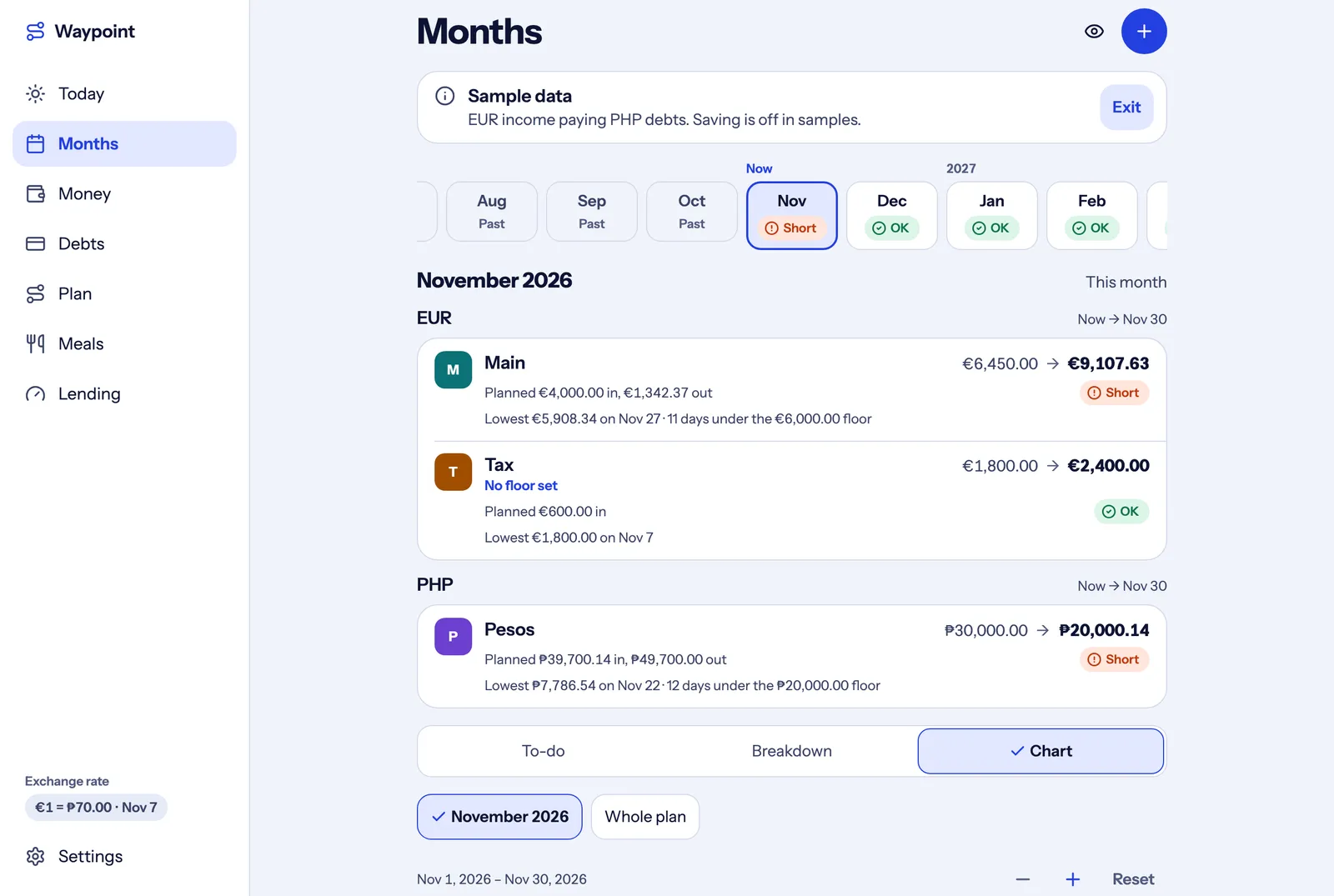 Each month is checked against each account’s floor. November is short on two accounts; December onwards is fine.
Debts: when it’s gone
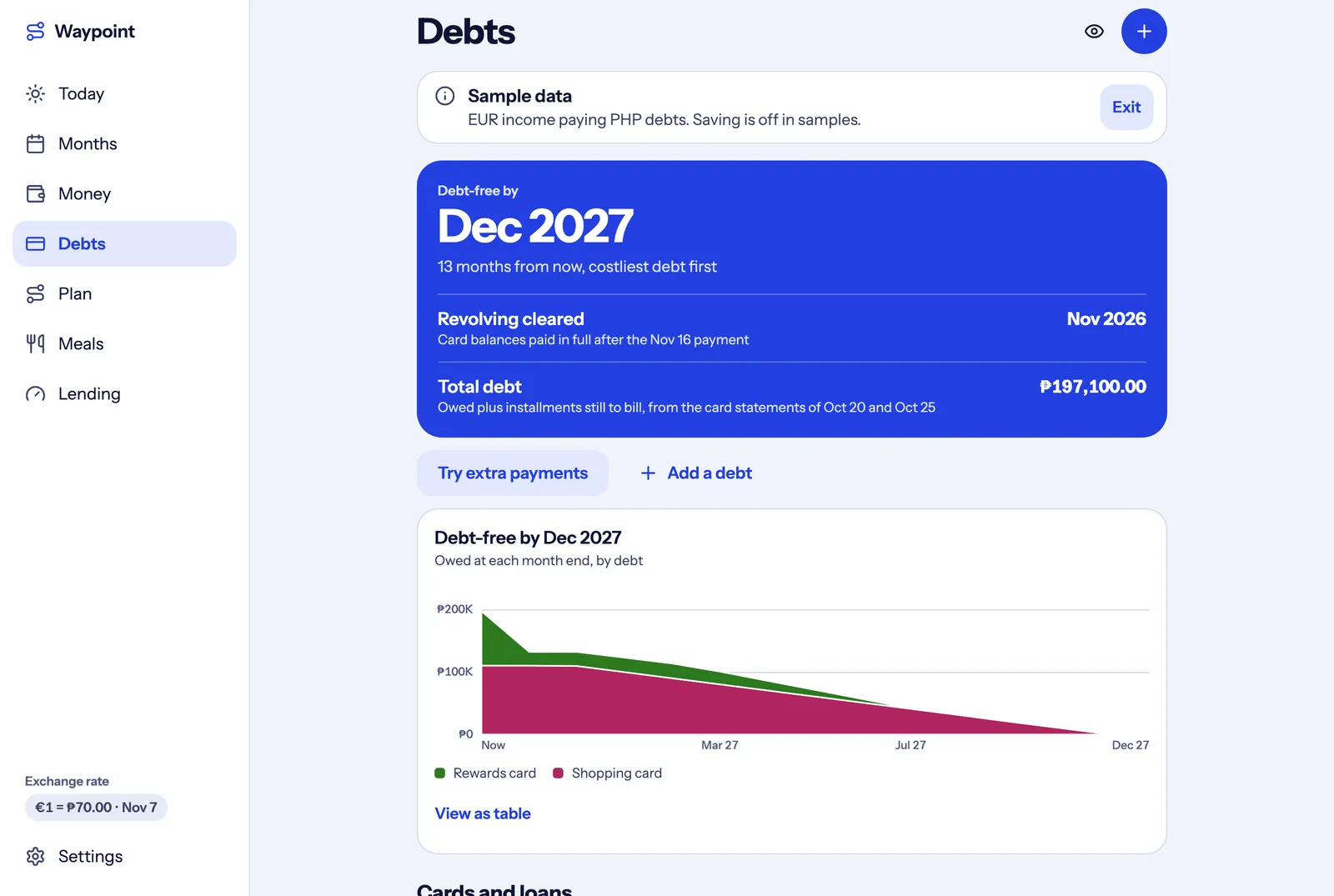 Costliest debt first. The chart shows what’s owed at each month end, by card.
Plan: what if
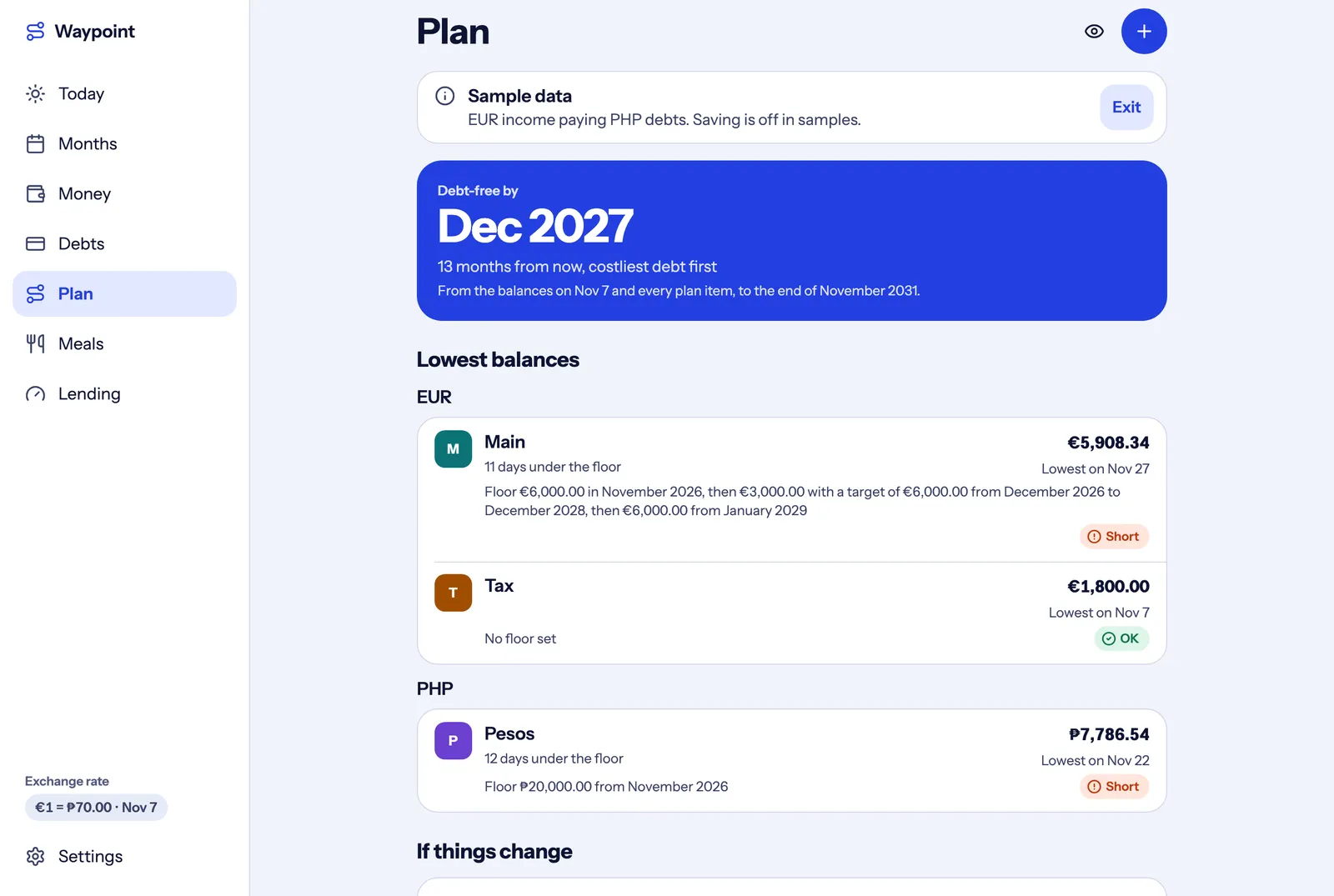 The plan is the list of every recurring bill, income and transfer. Compare tries a change, such as a rent rise or a loan offer, beside the plan as it stands.
Meals: the week’s shopping
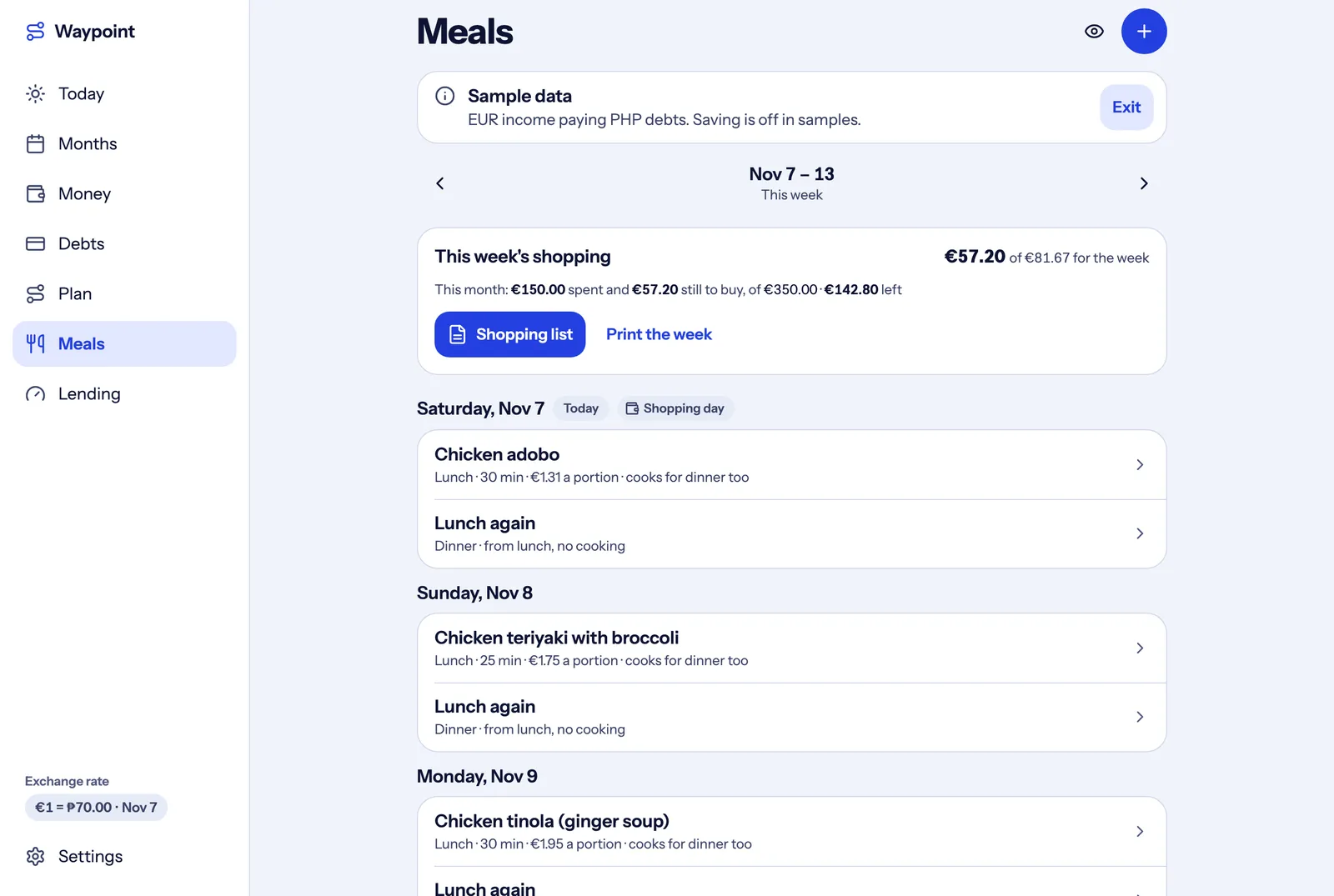 A week of meals priced from the shopping list, against the grocery budget.
The assistant
Most entries don’t start in the app. I paste a statement or describe a payment, and Claude Code records it through Waypoint’s MCP server, as the signed-in user, with row-level security and every database check applied. Each write states the balances it expects before and after, is idempotent on its batch id, and answers with what changed: each account’s lowest balance, its days under the floor and the FX margin, before and after. The write-up goes through each rule.