ESP32 air-con controller
An ESP32 that learns an air-con remote's IR codes, replays them, reads the room, and runs its schedules even when the internet is down.
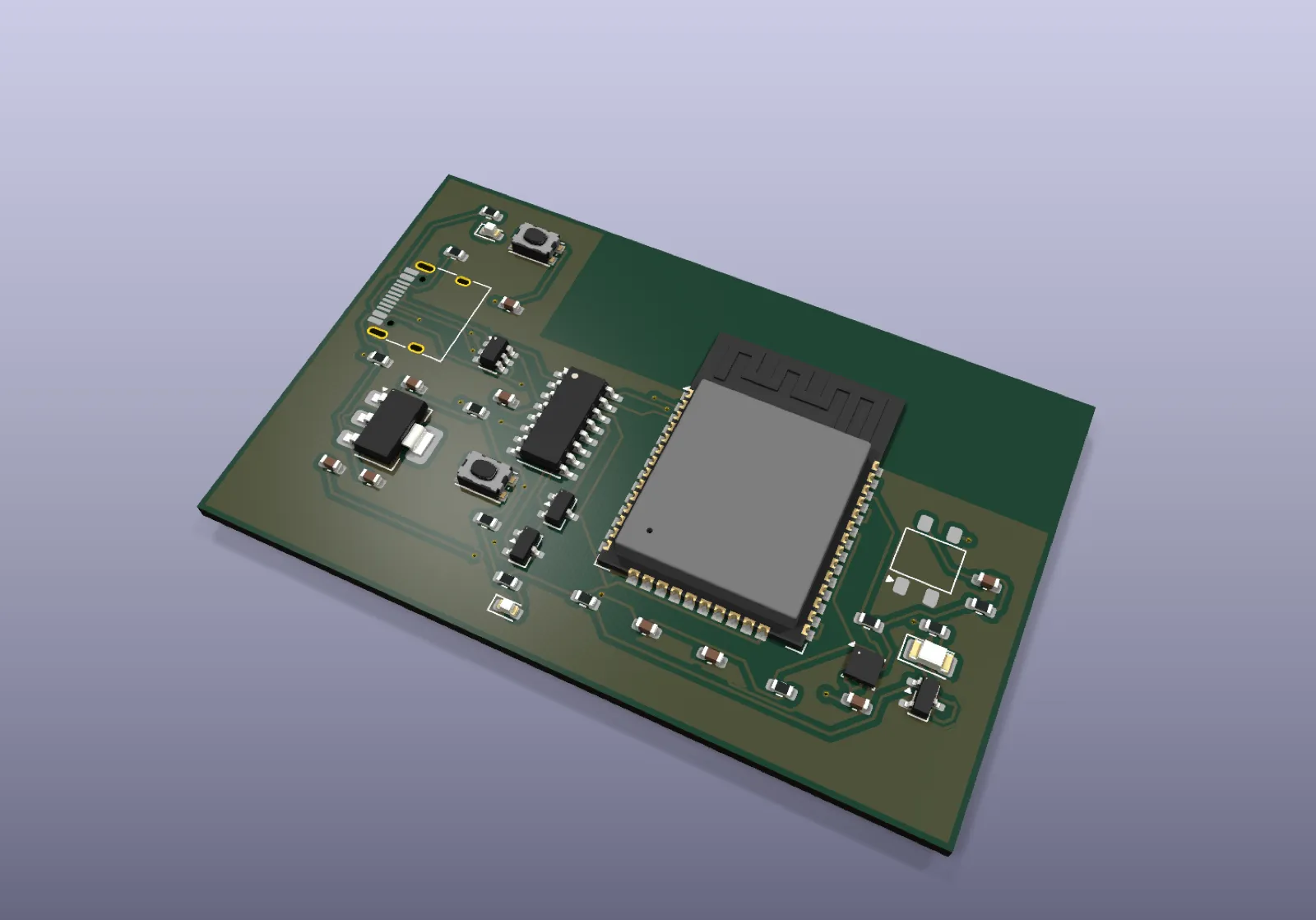
The board
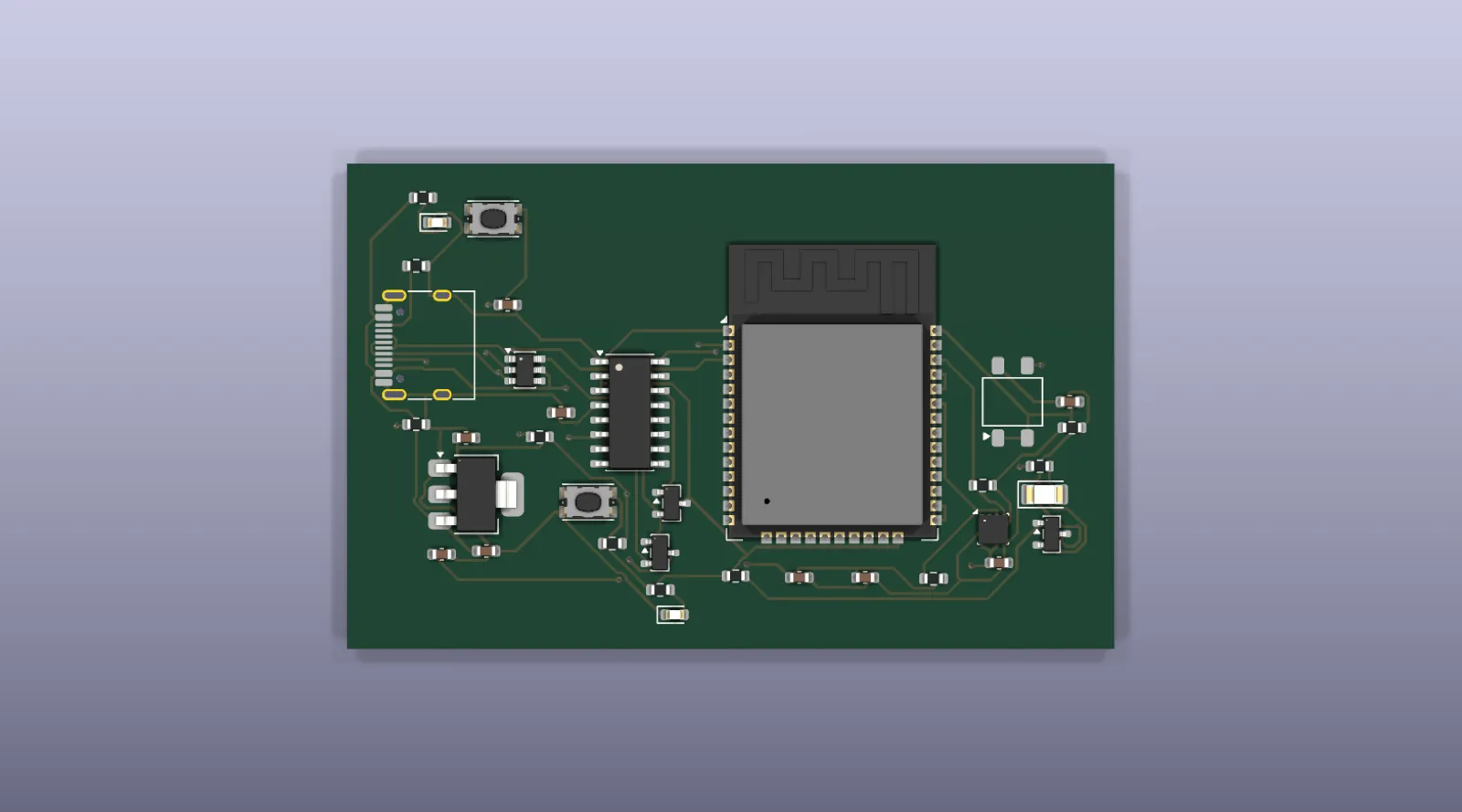 An orderable integrated board, with a schematic, a parts list for assembly and fabrication steps in the repo. The prototype is a dev board and modules on a breadboard.
An ESP32 GPIO can’t drive an IR LED to remote-control range by itself: it sources tens of milliamps, and the LED wants a hundred or more in short pulses. So the LED runs off the 5 V rail through a transistor the GPIO switches. The IR receiver is a 38 kHz demodulator module and connects straight to a pin, and a temperature and humidity sensor sits on I²C.
The enclosure
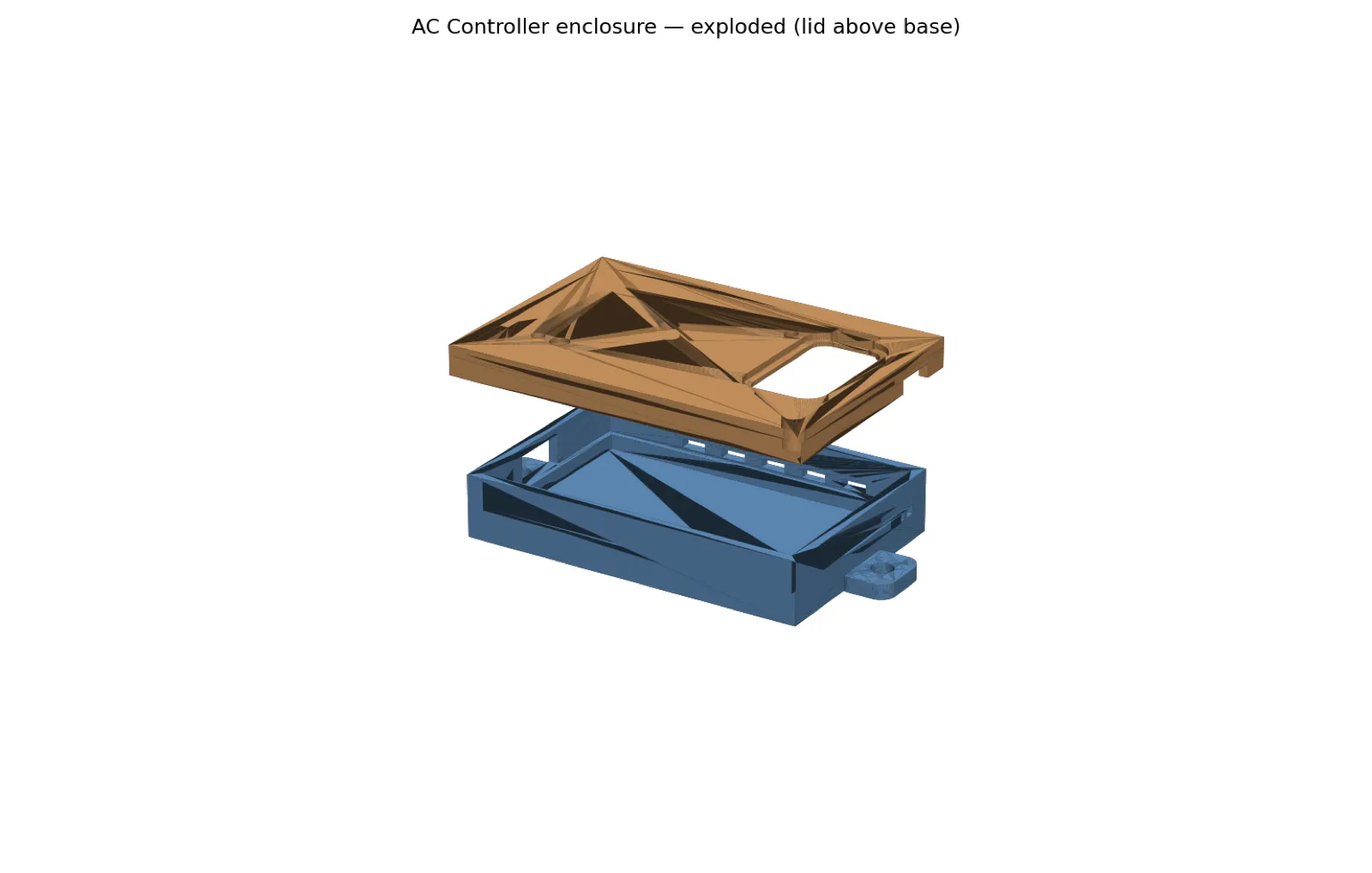 A printed two-part enclosure, with an open window over the IR parts.
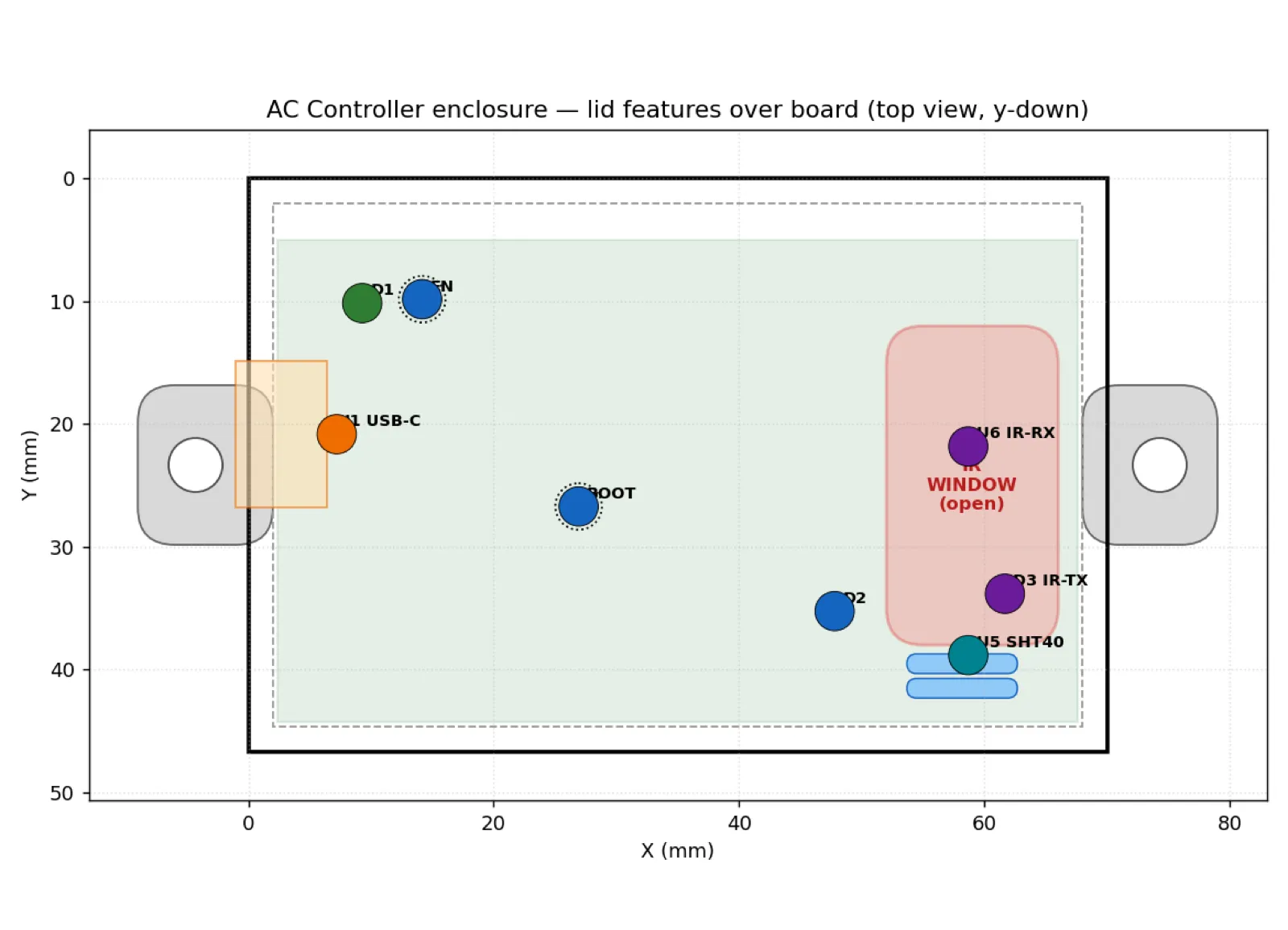 The lid’s openings over the board, seen from above.
Teach it your remote
- Put the device in capture mode with the button or the API.
- Point the air-con remote at it and press each button you’ll want: power, modes, temperatures, fan speeds.
- The codes are stored on the device, and replaying one drives the air-con exactly as the remote would.
Control and schedules
Commands and schedules go through a small AWS backend: an HTTP API in front of Lambda, DynamoDB for state and schedules, and AWS IoT Core over MQTT with TLS to the device. Every API route needs a signed-in user, and the device’s IoT policy reaches only its own topics.
The device keeps its schedules locally and fires them on time even when the internet is down. Steady-state cost is a few cents a month per device: Lambda instead of a server, and no VPC or NAT gateway.
Updates
Firmware updates are signed. The device checks an ECDSA P-256 signature over the whole image before switching to it, and a failed check aborts the update.